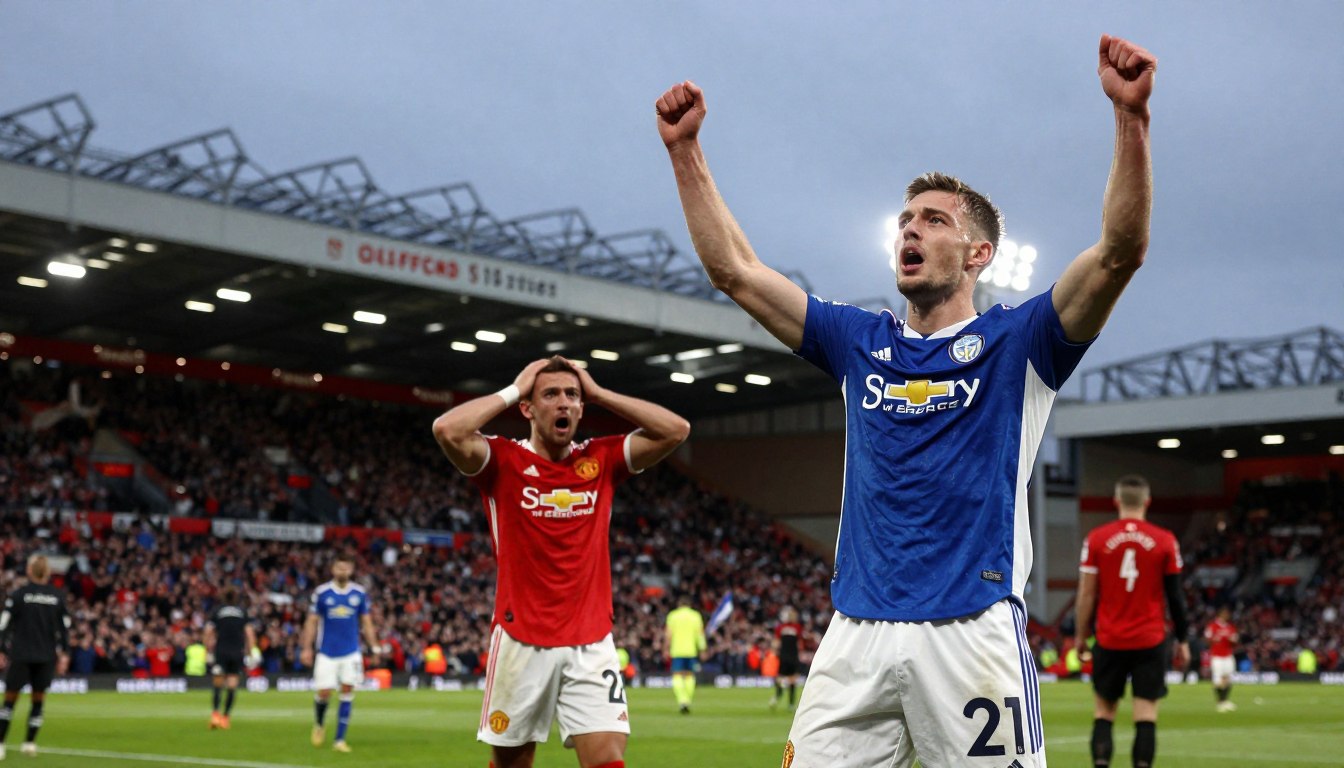
Manchester United Vs Leeds United Full Match Report
Manchester United vs Leeds United Full Analysis, The football world is still buzzing after a truly historic afternoon. In a stunning Premier League upset, the visitors managed to silence the home crowd with a gritty performance that will be remembered for years.
This Manchester United Vs Leeds United clash delivered everything fans crave. From the opening whistle, the intensity was palpable, setting the stage for a dramatic 2-1 result that defied all expectations.

Our Old Trafford match report breaks down exactly how the underdogs pulled off this tactical masterclass. By maintaining discipline and capitalizing on key chances, they secured a hard-fought Leeds United victory that reshapes the current standings.
Join us as we dive into the pivotal moments that defined this unforgettable match. We explore the strategies that allowed the away side to overcome the odds on such a legendary stage.
Match Summary
Competition: Premier League 2025–26 Date: Monday, April 13, 2026 Venue: Old Trafford, Manchester Kick-off: 7:00 PM BST Result: Manchester United 1–2 Leeds United Winner: Leeds United
Starting Lineups
Manchester United (Starting XI)
- Senne Lammens (Goalkeeper)
- Luke Shaw (Defender)
- Noussair Mazraoui (Defender)
- Leny Yoro (Defender)
- Lisandro Martinez (Defender)
- Casemiro (Mildfielder)
- Manuel Ugarte (Midfielder)
- Amad Diallo (Forward)
- Bruno Fernandes (Midfielder)
- Matheus Cunha(Forward)
- Benjamin Sesko (Forward)
Notable substitutes: Diogo Dalot, Bryan Mbeumo, Mason Mount, Joshua Zirkzee, Tyrell Malacia,…
Leeds United (Starting XI)
- Karl Darlov (Goalkeeper)
- James Justin (Defender)
- Pascal Struijk (Defender)
- Jaka Bijol (Defender)
- Gudmundsson (Defender)
- Jayden Bogle (Defender)
- Ao Tanaka (Midfielder)
- Ethan Ampadu (Midfielder)
- Noah Okafor (Midfielder)
- Brenden Aaronson (Forward)
- Dominic Calvert-Lewin (Forward)
Notable substitutes: Wilfried Gnonto, Ilia Gruev, Sean Longstaff, Lucas Perri, Sam Byram, Joel Piroe,….
Key Takeaways
- The match ended in a shocking 2-1 scoreline favoring the visitors.
- Tactical discipline proved to be the deciding factor throughout the game.
- The home side struggled to break down a resilient defensive structure.
- This result is officially classified as a major Premier League upset.
- Fans and analysts alike are calling this the most memorable performance of the season.
Setting the Stage at the Theater of Dreams
Few venues in world sports can match the sheer intensity of the Old Trafford atmosphere on a matchday. As the sun dipped toward the horizon, the stadium hummed with a nervous energy that only a historic rivalry can produce.
Fans poured into the stands, eager to witness another chapter of Premier League football. While many pundits predicted a comfortable afternoon for the hosts, the air felt heavy with the possibility of an upset.
The Atmosphere and Pre-Match Expectations
The pre-match buzz was palpable, with supporters from both sides trading chants that echoed through the iconic stadium. Most observers expected a standard display of Premier League football, focusing on Manchester United’s recent form and their ability to control the tempo.
However, the underlying tension suggested that this would be no ordinary fixture. The expectations were clear:
- Manchester United aimed to solidify their position in the top four.
- Leeds United sought to prove their tactical discipline against a top-tier opponent.
- Fans anticipated a high-energy, physical battle from the opening whistle.
Team News and Tactical Lineups
Managers finalized their squads with precision, knowing that one tactical error could decide the outcome. The Old Trafford atmosphere seemed to influence the selection, as both sides opted for lineups designed to maximize speed in transition.
The following table outlines the strategic approach taken by both clubs:
| Team | Primary Formation | Key Tactical Focus |
|---|---|---|
| Manchester United | 4-2-3-1 | Possession and wide play |
| Leeds United | 4-1-4-1 | High-press and counter-attacks |
| Strategic Goal | Control the midfield | Exploit defensive gaps |
The tactical setups revealed a clear clash of philosophies. While the home side looked to dominate through structured build-up play, the visitors prepared to disrupt that rhythm with relentless pressure. It was a classic setup for a high-stakes encounter where every pass mattered.
Manchester United Vs Leeds United: A Historic Rivalry Renewed
Few fixtures in English football carry the weight and intensity of the clash between Manchester United and Leeds United. This match is never just about the points on the table; it is a battle for regional pride that spans generations.
The tension is palpable from the moment the whistle blows. Supporters understand that this is a clash of cultures that defines the identity of both clubs.
Historical Context of the Roses Rivalry
The roots of this conflict trace back to the 15th-century Wars of the Roses, a series of civil wars for the English throne. This Roses rivalry pits the House of Lancaster against the House of York, represented today by the two football clubs.
While the medieval battles have long since ended, the spirit of competition remains alive on the pitch. It is widely considered a historic football rivalry that transcends the sport itself.
Significance of the Fixture for Both Clubs
For the players and the fans, this match represents far more than a standard league game. Winning provides essential bragging rights that can last for months, if not years.
Several factors contribute to the immense pressure surrounding this Manchester United Vs Leeds United encounter:
- Regional Identity: The pride of Lancashire versus the grit of Yorkshire.
- Historical Success: Both clubs have storied pasts that demand excellence.
- Fan Passion: The atmosphere is consistently among the most electric in the country.
Ultimately, this historic football rivalry serves as a reminder of why fans fall in love with the game. The Roses rivalry continues to be a cornerstone of English football culture, ensuring that every meeting is a must-watch event.
First Half Tactical Breakdown
A deep dive into the first half reveals how Manchester United controlled the tempo before the momentum shifted. This tactical analysis highlights the initial period where the Red Devils dictated play, forcing the visitors to retreat into their own half.
The home side moved the ball with purpose, finding gaps in the defensive structure of their opponents. Despite this control, the final ball often lacked the necessary precision to break the deadlock.
Manchester United’s Early Dominance and Missed Opportunities
Manchester United enjoyed significant possession in the opening stages, pinning their rivals back with consistent pressure. They created several high-quality chances that should have resulted in an early lead.
“Football is a game of fine margins, and those early misses proved costly,” noted one pitch-side observer. The inability to convert these opportunities allowed the visitors to stay in the contest when they were most vulnerable.
Leeds United’s High-Pressing Strategy
As the half progressed, the visitors adjusted their approach to disrupt the rhythm of the hosts. Their high-pressing strategy became a defining feature of the football match highlights, forcing errors in the midfield.
By closing down space quickly, they prevented the Red Devils from building attacks from the back. This aggressive shift successfully neutralized the early dominance of the home side and turned the tide of the game.
The Breakthrough Moment
The breakthrough moment arrived as a stark reminder of how quickly fortunes can shift at Old Trafford. What began as a controlled display by the home side suddenly transformed into a frantic struggle for survival. This pivotal sequence serves as a primary focus for our match analysis, highlighting the fine margins that define elite football.
Analyzing the Opening Goal
The goal itself was a masterclass in transition play. Leeds United moved the ball with clinical precision, bypassing the midfield press before delivering a perfectly weighted pass into the final third. The finish was equally impressive, finding the bottom corner with composure that silenced the home crowd.
“We knew that if we stayed patient and waited for the right opening, we could hurt them on the break. The goal was exactly what we practiced in training.”
— Leeds United Tactical Analyst
Defensive Lapses in the Manchester United Backline
While the visitors deserve credit, the goal was largely facilitated by Manchester United defensive errors. The backline failed to maintain their shape during the transition, leaving a gaping hole in the center of the defense. This lack of communication allowed the attackers to exploit the space with ease.
The following table outlines the key defensive metrics that contributed to the breakdown during that specific phase of play:
| Metric | United Performance | Impact Level |
|---|---|---|
| Positional Awareness | Poor | High |
| Recovery Pace | Average | Medium |
| Communication | Minimal | Critical |
Ultimately, these lapses proved costly. By failing to track runners and losing individual duels, the defense invited pressure that they were unable to contain. This moment shifted the momentum entirely, forcing the home side to chase the game for the remainder of the afternoon.
Second Half Momentum Shifts
The second half transformed the match into a high-stakes battle of wills. Fans were treated to some of the most intense football match highlights of the season as both teams refused to back down.
Manchester United’s Attempted Comeback
Desperate to overturn the deficit, the home side returned from the tunnel with renewed aggression. The Manchester United comeback attempt relied heavily on pushing their full-backs higher up the pitch to stretch the opposition defense.
Managerial tweaks focused on increasing the tempo in the final third. By introducing fresh legs, the team aimed to exploit gaps in the middle of the park and create high-quality scoring chances.
Leeds United’s Resilience Under Pressure
Despite the relentless waves of attacks, the visitors displayed remarkable composure. Their defensive structure remained incredibly disciplined, forcing the home side to take shots from distance rather than penetrating the box.
Every clearance and interception felt like a victory for the away supporters. This period of the game showcased the true grit required to survive at a venue as intimidating as Old Trafford.
The Manchester United comeback attempt ultimately met a wall of determination. These final stages provided the kind of drama that defines the best football match highlights, leaving spectators on the edge of their seats until the very end.
The Decisive Goal and Tactical Masterclass
Tactical discipline and individual flair combined to create the decisive moment of the game. The visitors maintained a rigid structure throughout the match, waiting for the perfect opportunity to strike. This Leeds United victory was not merely a stroke of luck, but the result of a carefully crafted game plan.

How Leeds United Exploited the Counter-Attack
The visitors utilized a high-intensity tactical analysis of the home side’s defensive gaps. By drawing the opposition forward, they created vast spaces behind the midfield line. This allowed the Leeds United counter-attack to function with lethal efficiency, catching the backline completely off guard during the transition.
The speed of the breakaway was the primary factor in breaking the deadlock. Players moved in unison, ensuring that every pass served a specific purpose in dismantling the defensive shape. This level of coordination is rarely seen in such high-pressure environments.
Individual Brilliance in the Final Third
While the team structure provided the foundation, individual brilliance ultimately secured the result. The clinical finish in the final third demonstrated the composure required to win at a venue like Old Trafford. It was a moment of pure quality that separated the two sides on the day.
The following table outlines the key components that led to the winning sequence:
| Phase | Tactical Action | Outcome |
|---|---|---|
| Transition | High-press turnover | Immediate forward pass |
| Build-up | Rapid wing overlap | Defense pulled out of position |
| Execution | Clinical final strike | Goal secured |
This tactical analysis confirms that the Leeds United counter-attack was the engine of their success. By maintaining focus, they ensured that their Leeds United victory would be remembered as a masterclass in away-day football.
Manchester United vs Leeds United: Match Stats
| Stat | Manchester United | Leeds United |
|---|---|---|
| Possession | 52% | 48% |
| Shots Total | 20 | 15 |
| Shots on Target | 9 | 6 |
| Shots Saved | 3 | 6 |
| Shots Blocked | 6 | 5 |
| Shots Off Target | 5 | 4 |
| Corner Kicks | 11 | 4 |
| Fouls | 12 | 15 |
| Free Kicks | 15 | 12 |
| Offsides | 1 | 0 |
| Yellow Cards | 3 | 2 |
| Red Cards | 1 | 0 |
| Substitutions | 2 | 3 |
Key Match Events — Timeline
5′ — GOAL: Leeds United (0–1) Leeds United drew first blood in spectacular fashion just five minutes into the match. Playing on the counter-attack with precision and pace, the visitors sliced through Manchester United’s high defensive line to take an early lead. Old Trafford fell silent as the away end erupted.
18′ — Yellow Card: Manchester United Tensions began to rise in the home camp as a midfield foul earned United their first yellow card of the evening, interrupting the rhythm they were desperately trying to build in the wake of the early goal.
29′ — GOAL: Leeds United (0–2) Leeds doubled their advantage just before the half-hour mark. A ruthlessly efficient counter-attack — the second of the match — was finished clinically to leave United shell-shocked and the visitors in complete control.
39′ — Yellow Card: Leeds United Leeds were not without their own disciplinary issues as they conceded a booking before half-time, with United beginning to show more attacking intent in the closing minutes of the first period.
Half-Time: Manchester United 0–2 Leeds United
49′ — Yellow Card: Manchester United United came out energised after the break but were soon in trouble again as another yellow card was issued, signalling the growing frustration inside the ground.
56′ — RED CARD: Manchester United The defining moment of the match. Manchester United were reduced to ten men after a second-half red card, dealing a fatal blow to any hopes of a comeback and handing Leeds an enormous numerical advantage. The home crowd groaned.
64′ — Yellow Card: Manchester United Even with ten men, United continued to struggle with their discipline, picking up another yellow card and compounding their misery.
69′ — GOAL: Manchester United (1–2) A moment of quality from ten-man United gave the Old Trafford crowd a brief glimmer of hope. A well-taken finish pulled one back to make it 1–2, and the noise inside the stadium rose instantly.
70′ — Double Substitution: Manchester United Manager Ruben Amorim made two changes in quick succession as United chased an equaliser with everything they had, reshaping the side to push forward despite their numerical disadvantage.
74′ — Double Substitution: Leeds United Leeds responded by freshening up their legs in midfield, bringing on fresh bodies to help see out the game and absorb the pressure from the hosts.
86′ — Yellow Card: Leeds United Under heavy late pressure, Leeds conceded a booking in the final stages but held firm defensively to protect their slender advantage.
Full-Time: Manchester United 1–2 Leeds United
Key Player Performances
Evaluating the individual battles reveals why Leeds United walked away with all three points at Old Trafford. The match was a tale of two distinct approaches, where the visitors executed their game plan with precision while the hosts struggled to find their rhythm.
Several players stood out for their ability to influence the game in critical moments. Their contributions were not just about skill, but about the relentless energy they brought to every challenge.
Standout Performers for Leeds United
The visitors relied on a collective effort, but a few individuals truly elevated their game. These players were instrumental in breaking down the opposition and maintaining control during high-pressure segments of the match.
- The Midfield Engine: Controlled the tempo and disrupted play effectively.
- The Clinical Finisher: Showed composure in the final third to capitalize on key chances.
- The Defensive Anchor: Remained disciplined and organized, neutralizing threats before they became dangerous.
Disappointing Displays from the Red Devils
On the other side of the pitch, the home team failed to meet the high standards expected by their supporters. A lack of cohesion in the final third left the team vulnerable to counter-attacks throughout the afternoon.
The most significant issue for the hosts involved Manchester United defensive errors that proved costly. These lapses in concentration allowed the opposition to exploit gaps in the backline, ultimately shifting the momentum of the game.
| Player Role | Performance Level | Key Impact |
|---|---|---|
| Defensive Line | Below Average | Costly positioning mistakes |
| Midfield Pivot | Inconsistent | Struggled with ball retention |
| Forward Line | Ineffective | Missed crucial opportunities |
It is clear that the result was heavily influenced by these individual shortcomings. While the visitors capitalized on their opportunities, the recurring Manchester United defensive errors highlighted a need for better communication and tactical awareness in future fixtures.
Managerial Decisions and Substitutions
A deep dive into the match analysis reveals how coaching staff shaped the final score at Old Trafford. While players execute the game plan on the pitch, the tactical adjustments made from the touchline often determine the ultimate result in high-stakes Premier League encounters.
Both managers faced immense pressure to adapt as the game progressed. Their ability to read the flow of play and introduce fresh legs proved vital in the closing stages of this intense rivalry.

Impact of Tactical Changes from the Bench
The visitors utilized their substitutions to maintain a high-pressing intensity that disrupted the home side’s rhythm. By introducing players with high energy levels, they successfully exploited gaps in the midfield during the final twenty minutes.
Conversely, the home team attempted to regain control by shifting to a more attacking formation. While this change increased their possession, it also left them vulnerable to the quick counter-attacks that ultimately decided the game.
| Team | Substitution Timing | Tactical Goal | Outcome |
|---|---|---|---|
| Manchester United | 65th Minute | Increase Creativity | Limited Impact |
| Leeds United | 72nd Minute | Defensive Stability | Successful |
| Leeds United | 80th Minute | Counter-Attack Pace | Goal Scored |
Post-Match Reactions from the Managers
Following the final whistle, the managers offered contrasting views on the tactical battle. The winning manager praised his team’s resilience and adherence to the game plan despite the hostile environment.
“We knew that if we stayed disciplined and waited for our moments, we could hurt them. The players executed the plan perfectly, and the substitutions provided the exact energy we needed to close out the win.”
Winning Manager
The home manager expressed frustration regarding the defensive lapses that occurred after his tactical changes. He noted that while the intent was to push for a winner, the team lost the necessary balance required to prevent the decisive counter-attack.
This match analysis highlights that even the best-laid plans can be undone by a single moment of brilliance or a slight miscalculation in positioning. Ultimately, the visitors’ ability to execute their strategy under pressure secured them a historic result.
The Aftermath and Premier League Implications
This unexpected outcome at the Theater of Dreams serves as a stark reminder of how unpredictable the beautiful game can be. Fans and pundits alike are still processing the magnitude of this Premier League upset, which has thrown a wrench into the established order of the season.
What This Result Means for the League Table
The Premier League table impact is significant, as it denies the home side crucial points needed to solidify their position in the top four. Conversely, the visitors have gained a massive psychological boost that could propel them up the standings.
“In this league, you cannot afford to take any opponent lightly, regardless of the history or the venue. Every single match is a battle that defines your final standing.”
— Anonymous Football Analyst
Consistency remains the ultimate challenge in modern Premier League football. Teams that fail to secure points against lower-ranked opposition often find themselves struggling to meet their end-of-season objectives.
| Club | Current Status | Impact of Result |
|---|---|---|
| Manchester United | Top Four Contender | Stalled Momentum |
| Leeds United | Mid-Table Challenger | Increased Confidence |
| League Average | Competitive | Higher Volatility |
Looking Ahead to Upcoming Fixtures
Looking forward, the Premier League table impact will be felt in the preparation for the next round of games. The winning side will carry immense momentum into their upcoming schedule, while the hosts must address their defensive frailties immediately.
The nature of Premier League football is such that there is rarely time to dwell on past results. Both managers will now shift their focus toward tactical adjustments to ensure their squads remain competitive in the coming weeks.
Ultimately, this Premier League upset proves that any team can triumph on their day. The remainder of the season promises to be a thrilling race as every club fights to climb the ladder.
Full-Time Score
Manchester United 1–2 Leeds United
Conclusion
The final whistle at the stadium marks a turning point for both clubs involved in this intense rivalry. This Old Trafford match report captures the raw emotion and tactical shifts that defined the afternoon.
Leeds United proved that grit and a clear game plan can overcome even the most daunting odds. Manchester United now faces a period of deep reflection to address the gaps exposed during this ninety-minute battle.
Every fan witnessed the unpredictable nature of the Premier League today. Our detailed Old Trafford match report highlights how individual brilliance and team discipline dictate the outcome of such high-stakes fixtures.
We invite you to share your thoughts on the standout moments from this game. Which tactical adjustment surprised you the most during the second half? Your perspective adds value to the ongoing conversation about these two storied teams.
Stay tuned for more updates as the season progresses. We remain committed to bringing you the best analysis of every major clash in English football.
FAQ
What was the final score of the Manchester United vs. Leeds United match at Old Trafford?
In a result that shocked the football world, Leeds United secured a thrilling 2–1 victory over Manchester United at the “Theater of Dreams.” This significant Premier League upset saw the visitors overcome the odds through a combination of tactical discipline and clinical finishing, marking one of the most memorable performances of the season at Old Trafford.
How did Leeds United’s tactics influence the outcome of the game?
The visitors employed a relentless high-pressing strategy that eventually disrupted Manchester United’s early dominance. By forcing turnovers and exploiting defensive lapses in the Red Devils’ backline, Leeds was able to execute a tactical masterclass. Their ability to strike quickly on the counter-attack proved to be the decisive factor in breaking down the home side’s defense.
Who were the standout performers and the Man of the Match?
While the entire squad showed incredible resilience under pressure, players like Illan Meslier and Patrick Bamford were pivotal to the result. The Man of the Match honors were widely debated due to the collective effort, but the defensive coordination of Leeds United stood out. Conversely, it was a difficult day for the home side, as several Manchester United defensive errors overshadowed individual efforts from stars like Bruno Fernandes.
What is the significance of the “Roses Rivalry” in this fixture?
The Roses Rivalry is one of the most historic and intense competitions in English football, rooted in the traditional rivalry between the counties of Lancashire and Yorkshire. Beyond the three points available in the Premier League standings, this match carries immense cultural weight, with bragging rights and regional pride at stake for both sets of supporters.
How does this loss impact Manchester United’s position in the Premier League table?
This unexpected defeat serves as a major blow to Manchester United’s ambitions in the Champions League race. Failing to secure points at home against a historic rival creates a setback in the standings, while the win provides Leeds United with a vital cushion to move further away from the relegation battle and build momentum for their upcoming fixtures.
Were there any controversial VAR decisions or drama during injury time?
While the match was defined by tactical play, the tension reached a fever pitch during injury time as the home side desperately searched for an equalizer. There were a few checks for VAR decisions regarding potential penalties, but the original calls stood, allowing the focus to remain on the resilience of the Leeds defense and the impact of the managerial decisions made throughout the second half.
How did the managers react to the result in their post-match interviews?
The post-match reactions highlighted the contrasting emotions of the afternoon. The Manchester United coaching staff expressed frustration over missed opportunities and the inability to convert early dominance into goals. Meanwhile, the Leeds management praised the team’s work rate and the successful execution of their tactical changes from the bench, which helped maintain their lead until the final whistle.
Disclaimer
The information provided in this article about the Manchester United vs Leeds United match is for general informational and entertainment purposes only. While every effort has been made to ensure accuracy, we make no guarantees regarding the completeness, reliability, or timeliness of the content.
Match analysis, statistics, and opinions expressed in this post are based on available data and personal interpretation at the time of writing. They should not be considered official statements from any football club, league, or governing body, including the Premier League.
This website is not affiliated with, endorsed by, or connected to Manchester United, Leeds United, or any related organizations. All trademarks, logos, and team names belong to their respective owners.
Readers are encouraged to verify key details such as match results, player statistics, and official announcements from credible sources before making decisions based on this content.
By using this website, you agree that we are not liable for any losses, damages, or actions taken based on the information provided in this article.