
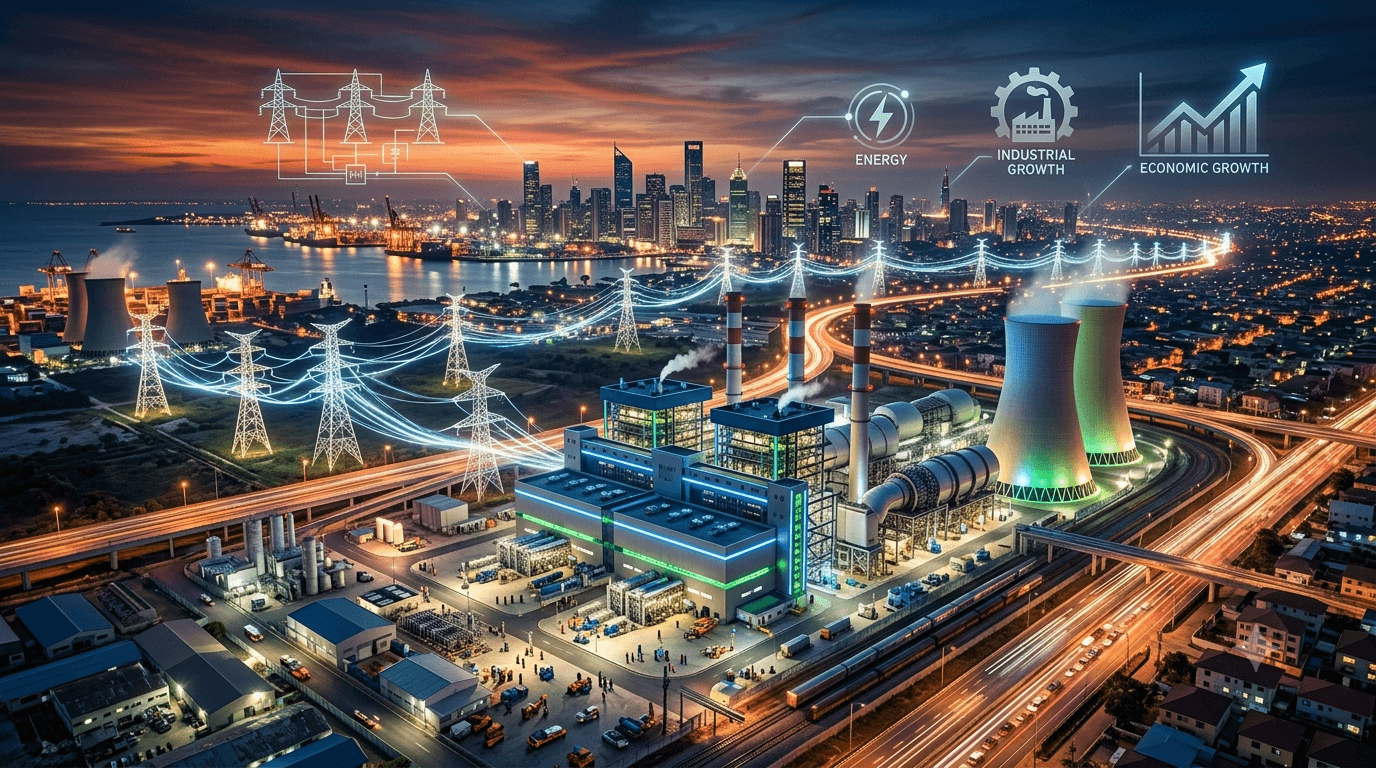
Explore how Aliko Dangote is tackling Africa’s energy crisis. From the 435MW refinery power plant to new 2026 expansion plans, discover the future of Nigerian power.

Powering Africa: Inside the Aliko Dangote Power Project Vision
For decades, the “Nigerian Dream” of consistent electricity has remained elusive. However, Africa’s richest man, Aliko Dangote, is no longer waiting for the national grid to catch up. With the recent operational success of the Dangote Refinery and a bold new 2026 roadmap, the Dangote Power Project is shifting from a supportive utility to a centerpiece of African industrialization.
1. The 435MW Powerhouse: A City Within a City
The crown jewel of Dangote’s energy infrastructure is the massive captive power plant located within the Dangote Petroleum Refinery and Petrochemicals complex in Lekki, Lagos.
To put this in perspective, this single site generates 435 Megawatts (MW) of electricity.
- Scale: This capacity is larger than the entire energy requirements of many small African nations.
- Self-Sufficiency: By bypassing the fragile national grid, the refinery ensures 24/7 operations, avoiding the billions in losses typically caused by power fluctuations in heavy manufacturing.
- Technology: The plant utilizes high-efficiency gas turbines to ensure low-emission, reliable energy for both the refinery and the neighboring fertilizer plant.
2. 2026 Expansion: Beyond the Refinery
As of March 2026, Aliko Dangote has officially unveiled plans to move beyond “captive power” (power used only for his own factories) and into large-scale electricity generation for the continent.
“We have to industrialize Africa,” Dangote recently stated, citing the Tata Group of India as a model.
His new strategy involves:
- Grid Integration: Exploring ways to feed excess power from industrial hubs back into the national electricity value chain.
- Steel & Power Synergy: The Group’s new move into steel production requires immense energy. By building integrated power-steel hubs, Dangote aims to lower the cost of infrastructure materials for all Nigerians.
- Job Creation: These power-heavy projects are expected to contribute to the 40–50 million new jobs Nigeria needs by 2030.
3. Why This Matters for Nigeria’s Economy
The lack of stable power is cited as the #1 barrier to business growth in West Africa. The Dangote Power Project addresses this through three specific channels:
| Feature | Impact on Nigeria |
| Energy Security | Reduces reliance on imported diesel for private generators. |
| Industrial Hubs | Encourages other businesses to set up near Dangote’s “energy-stable” zones. |
| Lower Costs | Mass production of energy at the source reduces the final price of cement, sugar, and fuel. |
4. The “Aliko Dangote Question”
Industry analysts often speak of the “Dangote Question”: Can a private individual solve what the state has struggled with for 60 years?
By building the world’s largest sub-sea pipeline infrastructure (1,100 km) to feed his power plants and refineries, Dangote has proven that integrated ecosystems—where you control the fuel, the plant, and the distribution—are the only way to bypass the “infrastructure gap” currently stalling African growth.
5. Conclusion: A Brighter Future
The Aliko Dangote Power Project is more than just a series of turbines and cables; it is a blueprint for African self-reliance. As the Group doubles down on its 2026 expansion into steel and utility-scale power, the continent edges closer to an era where “blackouts” are a relic of the past rather than a daily reality.
Quick Facts: Dangote Energy at a Glance
- Total Refinery Power Capacity: 435 MW.
- Primary Fuel Source: Natural Gas.
- Model: Captive Power & Industrial Integration.
- New 2026 Focus: Steel, Electricity Generation, and Port Development.
Stay tuned for more updates on Nigeria’s industrial revolution. If you found this insight helpful, share it with your network!
Follow Dailyedge360 for more of information like this
Disclaimer:
The information provided in this blog post is for general informational and educational purposes only. While we strive to provide accurate and up-to-date information regarding the Dangote Power Project and 2026 expansion plans, all figures and project details are subject to change by the Dangote Group. This content does not constitute professional advice or an official statement from Aliko Dangote or his affiliates.








[…] Dangote Power Project […]