
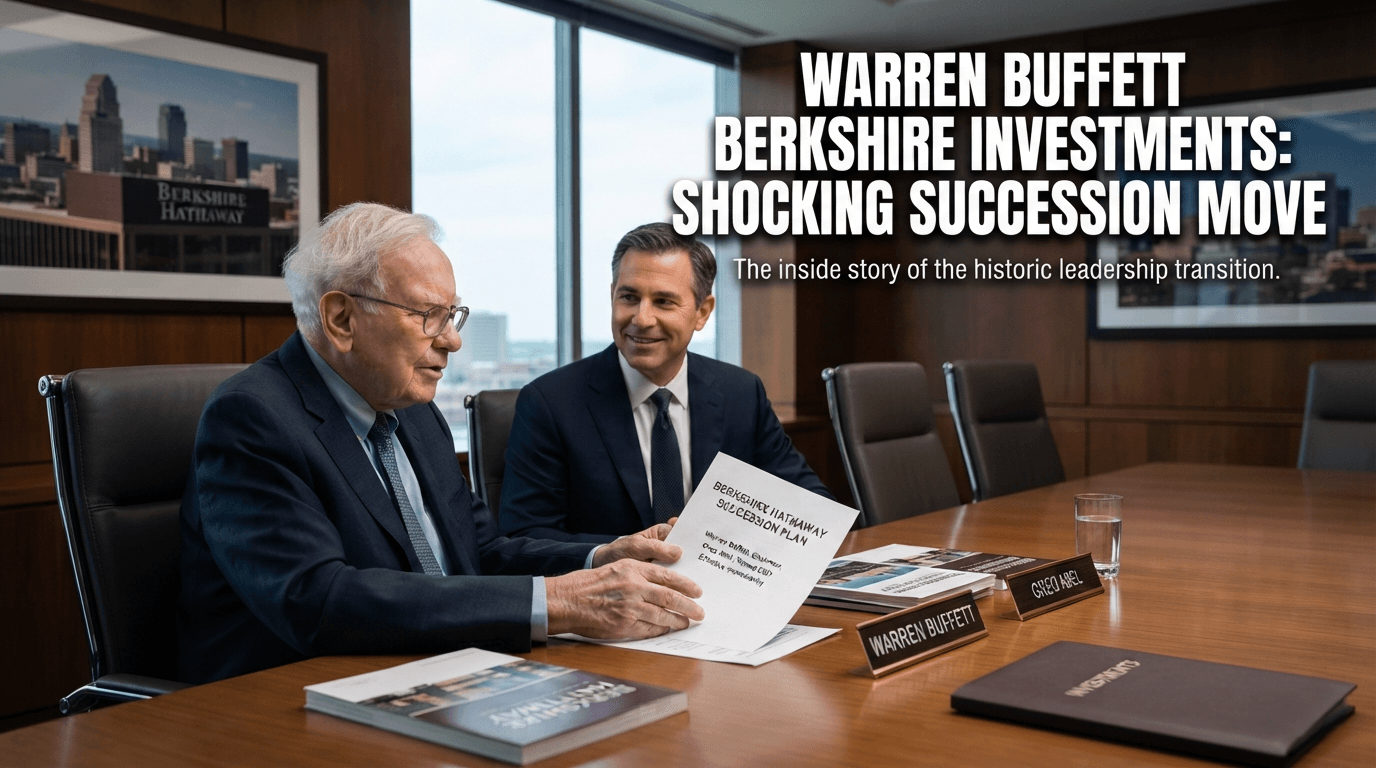
Breaking financial news! Read about the Warren Buffett Berkshire investments update as Howard Buffett takes over as Chairman alongside CEO Greg Abel.
The financial world is currently buzzing over the future of a legendary conglomerate. As stakeholders analyze warren buffett berkshire investments, the spotlight has shifted toward a major leadership transition. Greg Abel has emerged as the primary figure expected to guide the firm into its next chapter.
Investors are carefully scrutinizing how this change might impact long-term capital allocation. While many details remain subject to official confirmation, the market is already pricing in a new era of corporate governance. Understanding these shifts is vital for anyone tracking the company’s massive portfolio.

The transition represents a significant turning point for the organization. Analysts are watching closely to see if the core philosophy of the business will remain intact under new management. This period of uncertainty highlights the importance of strategic planning in massive global enterprises.
Key Takeaways
- Greg Abel is the designated successor to lead the conglomerate.
- Market participants are closely monitoring future capital allocation strategies.
- The transition marks a historic shift in corporate leadership.
- Investors should distinguish between confirmed reports and speculative market rumors.
- Long-term portfolio stability remains a top priority for shareholders.
What Warren Buffett’s Succession Move Means for Berkshire Hathaway
A carefully orchestrated succession plan is now taking center stage at Berkshire Hathaway. This strategic shift signals a move toward long-term stability rather than a sudden departure from established norms.
The leadership announcement and its timing
The timing of this announcement reflects a desire for transparency and order. By addressing the future of the firm while leadership remains stable, the company aims to minimize market uncertainty. This proactive approach ensures that stakeholders have ample time to digest the transition of authority.
Shareholders are primarily concerned with the preservation of the warren buffett investment strategy. They want to ensure that the core principles of value investing remain intact long after the current leadership steps aside. Continuity is the most critical factor for maintaining investor confidence in the conglomerate’s future performance.
The difference between a planned handoff and an emergency change
It is vital to distinguish between a deliberate handoff and an unplanned emergency. A planned transition allows for the gradual transfer of responsibilities, ensuring that the warren buffett investment strategy is fully understood by the incoming team. This method protects the corporate culture and operational discipline that have defined the firm for decades.
| Feature | Planned Handoff | Emergency Change |
|---|---|---|
| Communication | Proactive and clear | Reactive and urgent |
| Market Impact | Minimal volatility | High uncertainty |
| Strategy | Consistent continuity | Potential disruption |
| Leadership | Smooth transition | Abrupt shift |
Warren Buffett Berkshire Investments: The Reported Leadership Transition
The landscape of Berkshire Hathaway is shifting as the company prepares for a future beyond its legendary leader. While the firm remains a titan of industry, the transition of power has become a central topic for market observers tracking warren buffett berkshire investments.
Warren Buffett’s changing role at Berkshire Hathaway
Warren Buffett continues to oversee the vast majority of the company’s operations, yet his day-to-day involvement is gradually evolving. He remains the primary face of the organization, but he has increasingly delegated operational oversight to his trusted lieutenants. This shift is designed to ensure that the conglomerate maintains its unique culture and operational efficiency long after he steps down.
Greg Abel’s position as the expected successor
Greg Abel has been clearly identified as the individual slated to take the helm. As Vice Chairman of Non-Insurance Operations, Abel has already assumed significant responsibility for the company’s diverse business units. His track record suggests a focus on:
- Maintaining the decentralized management style that defines the firm.
- Overseeing capital allocation across various subsidiaries.
- Ensuring long-term stability for shareholders and employees alike.
What remains unconfirmed about the timing and scope of the transition
Despite the clarity regarding the successor, the specific timeline for a full leadership handoff remains largely undefined. The company has not provided a firm date for when Buffett will relinquish his remaining executive duties. This ambiguity is intentional, allowing the firm to remain flexible in its strategic planning.
Separating official statements from market speculation
Investors must distinguish between verified corporate communications and external rumors. While many analysts attempt to interpret warren buffett latest investments as signals of a looming transition, these portfolio moves often reflect broader market conditions rather than internal succession timelines. It is vital to rely on official filings and annual letters to understand the true direction of the company.
“The transition is a process, not a single event. We have the right people in place to ensure the company thrives for decades to come.”
— Berkshire Hathaway Leadership
Greg Abel’s Role and Berkshire’s New Chain of Command
Understanding the new chain of command requires a close look at how executive responsibilities are shifting within the organization. While the transition remains a process, the framework for future leadership is becoming increasingly clear to observers and stakeholders alike.
Greg Abel has spent years refining his leadership skills by managing Berkshire Hathaway Energy. His tenure in this sector provided him with a deep understanding of capital-intensive industries and complex regulatory environments. This experience serves as a strong foundation for overseeing the broader conglomerate.
Abel has demonstrated a consistent ability to drive growth while maintaining strict operational discipline. His approach emphasizes long-term value creation rather than short-term gains. This philosophy aligns perfectly with the established standards of the firm.
Which responsibilities may move from Buffett to Abel
The shift in authority will likely involve a transition of day-to-day operational oversight. While major strategic decisions have historically rested with the top leadership, Abel is expected to take a more active role in guiding the various business units. This includes coordinating with managers to ensure that performance targets are met consistently.
Furthermore, the responsibility for capital allocation will likely become a shared effort. Abel will need to balance the needs of existing businesses with the pursuit of new investment opportunities. This strategic delegation ensures that the company remains agile as it navigates future market cycles.
How Berkshire Hathaway’s decentralized operating model could support continuity
The strength of the company lies in its unique structure, which grants significant autonomy to individual business units. This decentralized approach allows warren buffett portfolio companies to operate with minimal interference from the corporate headquarters. By maintaining this culture, the firm ensures that local managers remain focused on their specific markets.
This model acts as a buffer against the risks associated with leadership changes. Because the individual warren buffett portfolio companies are already accustomed to self-governance, the transition at the top is less likely to disrupt daily operations. Continuity is effectively baked into the system, allowing the organization to thrive regardless of who holds the title of CEO.
Why Buffett Chose This Succession Structure
The structure of the upcoming leadership transition reflects a deep commitment to the firm’s unique operational DNA. Rather than seeking a radical overhaul, the plan prioritizes the continuity of the principles that have defined the company for decades. This approach ensures that the organization remains resilient even as it moves into a new era of management.
Protecting Berkshire Hathaway’s culture after Buffett
At the heart of the transition is the preservation of a decentralized culture. Berkshire Hathaway operates as a collection of autonomous businesses, a model that empowers local managers to make decisions without excessive corporate interference. Maintaining this independence is essential to keeping the entrepreneurial spirit alive across the conglomerate.
The leadership team understands that the company’s strength lies in its diverse portfolio of companies. By keeping the corporate office lean, the firm avoids the bureaucratic traps that often stifle growth in large organizations. This structure allows the culture to remain focused on long-term results rather than short-term quarterly pressures.
Preserving discipline in acquisitions and capital allocation
The core of the firm’s success has always been the rigorous application of warren buffett value investing principles. Future leaders are expected to maintain this high standard when evaluating new acquisitions or deploying capital. Discipline in this area prevents the company from overpaying for assets, ensuring that every dollar invested adds genuine value to the shareholders.
“The most important thing to do if you find yourself in a hole is to stop digging. We have always focused on buying businesses that can thrive without constant intervention.”
— Warren Buffett
Investors often look for consistency in how capital is allocated across the various subsidiaries. By adhering to the established framework of warren buffett value investing, the new leadership can signal to the market that the firm’s fundamental strategy remains unchanged. This commitment to value is what separates the company from its peers in the financial sector.
Maintaining confidence among Berkshire’s insurance and operating businesses
The insurance and operating units are the engines of the company, and their stability is paramount. These businesses require a leader who respects their unique operational needs while providing the necessary financial backing. The current succession plan is designed to reassure these managers that their autonomy will be protected.
| Focus Area | Current Strategy | Future Outlook |
|---|---|---|
| Capital Allocation | Value-Driven | Disciplined Continuity |
| Business Autonomy | High | Maintained |
| Risk Management | Conservative | Consistent |
Ultimately, the goal is to ensure that the transition is seamless for both employees and stakeholders. By focusing on warren buffett value investing and operational excellence, the firm aims to maintain the trust that has been built over many years. This strategic foresight is what positions the company for continued success in the years ahead.
Portfolio Changes Before the Leadership Handoff
The landscape of berkshire hathaway stock holdings is undergoing a notable transformation that warrants careful examination. As the company prepares for a future beyond its current leadership, market participants are paying close attention to every move. This heightened level of scrutiny is a natural response to the shifting tides within such a massive conglomerate.
Why investors are scrutinizing Berkshire Hathaway’s recent buying and selling
Investors are analyzing recent transactions to determine if they signal a fundamental change in strategy. Many are looking for clues about how the firm will navigate a post-Buffett era. Transparency remains a top priority for those who have long relied on the company’s consistent approach to value creation.
The significance of cash levels and reduced equity exposure
The accumulation of record cash levels has become a primary talking point for financial analysts. By reducing equity exposure, the firm appears to be exercising extreme caution in a market that many perceive as overvalued. This defensive posture suggests that finding high-quality assets at reasonable prices has become increasingly difficult.
How portfolio changes may reflect valuation concerns rather than succession alone
It is important to recognize that these adjustments may be driven by market conditions rather than the upcoming leadership transition. When evaluating warren buffett latest investments, one must consider the broader economic environment. Valuation concerns often dictate the pace of acquisitions, regardless of who sits in the executive chair.
Separating Buffett’s personal decisions from committee-driven investments
Distinguishing between individual choices and institutional strategy is vital for accurate analysis. While some moves reflect the classic style of the chairman, others are the result of a collaborative process involving a broader investment team. Understanding this distinction helps investors better predict how the firm might evolve under new leadership.
Ultimately, the current strategy reflects a disciplined approach to capital allocation. Whether the focus remains on warren buffett latest investments or shifts toward new opportunities, the core philosophy of protecting shareholder value remains the guiding principle for the organization.
Berkshire Hathaway Stock Holdings Investors Should Recheck
Investors are currently re-evaluating the core components of the berkshire hathaway stock holdings as the company prepares for a major leadership transition. While the shift in management captures headlines, the underlying assets remain the true engine of the firm’s long-term value. A clear understanding of these investments is essential for anyone tracking the company’s future stability.

Apple’s importance to Berkshire Hathaway’s equity portfolio
Apple has long served as a cornerstone of the equity strategy, representing a significant portion of the total market value. This investment reflects a high-conviction bet on consumer loyalty and ecosystem dominance. Investors should monitor this position closely, as any major adjustment here could signal a broader shift in the firm’s outlook on technology and valuation.
American Express, Coca-Cola, and Bank of America as core holdings
Beyond the tech sector, the firm maintains massive stakes in established financial and consumer brands. These warren buffett portfolio companies provide consistent cash flow and dividend income that support the company’s overall financial health. The following table highlights these essential pillars:
| Company | Sector | Strategic Role |
|---|---|---|
| American Express | Financial Services | Payment Processing |
| Coca-Cola | Consumer Staples | Brand Power |
| Bank of America | Banking | Capital Allocation |
Energy, railroads, insurance, and other operating assets outside the stock portfolio
It is vital to remember that the firm is more than just a collection of stocks. The company owns massive, capital-intensive businesses that operate independently of the equity market. These include:
- BNSF Railway: A critical piece of North American infrastructure.
- Berkshire Hathaway Energy: A leader in utility and renewable energy projects.
- GEICO and General Re: Insurance giants that provide the “float” for future investments.
Why concentration can magnify both gains and risks
The strategy of holding large, concentrated positions in a few warren buffett portfolio companies has historically driven massive outperformance. However, this approach also creates vulnerability if a specific sector faces a downturn. As the leadership transition unfolds, the ability to manage this concentration will be a key test for the new executive team.
How Buffett’s Investment Strategy May Change Under Abel
The transition of leadership at Berkshire Hathaway naturally leads investors to wonder how the firm’s investment philosophy might evolve. While the company has built its reputation on a specific set of principles, the shift toward new leadership invites a closer look at future capital allocation. Stability remains a priority, yet the market is eager to understand how the firm will navigate the coming decades.
What may remain consistent with Warren Buffett’s value investing principles
At its core, the warren buffett value investing framework relies on identifying companies with durable competitive advantages. This focus on intrinsic value and long-term holding periods is deeply embedded in the corporate culture. It is highly likely that the firm will continue to prioritize businesses with strong cash flows and capable management teams.
The commitment to maintaining a significant cash buffer will likely persist as a defensive measure. This strategy ensures that the company remains ready to act when high-quality assets become available at attractive prices. By adhering to these foundational rules, the leadership team aims to protect shareholder capital through various economic cycles.
Potential changes in acquisition size, sector exposure, and risk tolerance
While the philosophy remains, the execution may adapt to the scale of the current organization. Greg Abel has extensive experience managing large-scale operations, which could influence the size and nature of future acquisitions. There may be a shift toward sectors that align with modern infrastructure needs or technological shifts, provided they meet the firm’s strict return requirements.
Risk tolerance is expected to remain disciplined, though the specific focus might evolve. The following table outlines the potential evolution of the firm’s strategic priorities:
| Strategic Area | Traditional Approach | Potential Future Focus |
|---|---|---|
| Acquisition Size | Large, iconic brands | Scalable infrastructure & tech |
| Sector Exposure | Insurance, Rail, Energy | Diversified global growth |
| Risk Tolerance | Conservative/Value-driven | Calculated operational efficiency |
How Berkshire’s investment managers could influence future stock selections
The influence of investment managers like Todd Combs and Ted Weschler will likely grow as the firm moves forward. These managers have already demonstrated their ability to identify growth opportunities that complement the broader warren buffett investment strategy. Their input allows the company to maintain a presence in sectors that might otherwise be overlooked by traditional value-focused models.
By integrating these diverse perspectives, the firm can balance its historical roots with the need for modern innovation. This collaborative approach ensures that the warren buffett value investing legacy is preserved while allowing for necessary flexibility. Ultimately, the goal remains the same: delivering consistent, long-term value to shareholders through disciplined decision-making.
What Berkshire Hathaway Performance Signals About the Transition
Evaluating the health of a conglomerate requires looking past the daily noise of the stock market. While investors often fixate on daily price fluctuations, the true berkshire hathaway performance is best measured by the strength of its underlying business units.
Reading operating earnings beyond quarterly market movements
Operating earnings provide a much clearer picture of how the company generates cash on a day-to-day basis. These figures strip away the volatility of unrealized gains or losses in the equity portfolio, which can often distort the bottom line.
By focusing on these core earnings, stakeholders can better assess the stability of the firm. This approach is essential for understanding how the business will function under new leadership.
The role of insurance underwriting, investment income, and buybacks
Insurance underwriting remains the bedrock of the company’s financial success. When the insurance division consistently produces an underwriting profit, it provides a reliable stream of capital for future investments.
Investment income and strategic share buybacks further bolster the overall berkshire hathaway performance. These mechanisms demonstrate management’s commitment to returning value to shareholders while maintaining a fortress-like balance sheet.
How Berkshire Hathaway performance compares with the S&P 500
Comparing the firm to the S&P 500 is a common practice, yet it requires nuance. While the index tracks a broad basket of stocks, the company operates as a collection of diverse, wholly-owned businesses.
Investors should look at long-term growth trends rather than short-term quarterly beats. Consistent outperformance over decades remains the primary goal for the leadership team.
Why book value is no longer the only relevant benchmark
In the past, book value was the primary metric for tracking progress. However, as the company has shifted toward capital-intensive operating businesses, this metric has become less indicative of true economic value.
Modern analysis now favors a combination of cash flow generation and intrinsic value growth. The following table highlights key metrics that define the current financial landscape.
| Metric | Focus Area | Significance |
|---|---|---|
| Operating Earnings | Core Business | High |
| Insurance Float | Capital Base | High |
| Market Capitalization | Investor Sentiment | Moderate |
| Book Value | Historical Asset Base | Low |
As the company prepares for a new era, the spotlight turns toward how stakeholders will react to the upcoming leadership shift. Investors and market analysts are carefully observing every signal to understand how the firm will maintain its legendary performance. This period of transition invites deep scrutiny regarding the future of the conglomerate.

Shareholders are primarily concerned with the long-term stability of the company’s decentralized model. They often ask how the new leadership will preserve the unique culture that has defined the firm for decades. Many investors seek clarity on how voting power and board oversight will evolve once the transition is complete.
The clarity provided in the warren buffett annual letter serves as a vital tool for addressing these concerns. By outlining the philosophy behind capital allocation, the letter helps calm market nerves. It provides a roadmap for how the company intends to navigate the post-transition landscape.
How analysts may evaluate Abel’s investment judgment
Market analysts are shifting their focus toward Greg Abel’s specific track record and decision-making style. They are looking for evidence that his approach to risk management aligns with the firm’s historical success. Evaluating his judgment requires looking at his past performance in managing complex operating businesses.
Analysts will likely compare his strategic moves against the established benchmarks of the firm. They want to see if he can maintain the same level of disciplined capital allocation that defined his predecessor. This evaluation process is essential for maintaining investor confidence during the changeover.
Why the Berkshire Hathaway annual meeting remains a key source of guidance
The berkshire hathaway annual meeting continues to be the most important venue for direct communication between leadership and shareholders. It offers a rare opportunity for investors to hear directly from the executives about their vision for the future. This event remains a cornerstone for understanding the company’s priorities.
Furthermore, the insights shared during this gathering complement the information found in the warren buffett annual letter. Together, these resources provide a comprehensive view of the company’s health and strategic direction. Investors rely on these touchpoints to make informed decisions about their holdings.
Buffett’s Net Worth, Personal Stake, and Capital Allocation
Understanding the financial architecture of Berkshire Hathaway requires a close look at its founder’s personal stake. While the warren buffett net worth is often a topic of public fascination, its true significance lies in how it aligns his interests with those of individual shareholders.
How Buffett’s ownership stake affects Berkshire Hathaway governance
Buffett maintains a significant portion of his wealth in Berkshire Hathaway stock. This concentration of ownership ensures that he remains the primary stakeholder, effectively shielding the company from short-term market pressures.
His voting power allows him to guide the board toward long-term value creation rather than quarterly earnings targets. This governance model relies on a few core principles:
- Alignment of interests: Buffett’s personal financial success is tied directly to the company’s long-term health.
- Stability: His massive stake prevents hostile takeovers and encourages a patient approach to capital allocation.
- Accountability: The board operates with the knowledge that the founder is the largest individual investor.
The relationship between Warren Buffett’s net worth and Berkshire’s stock performance
Many observers track the warren buffett net worth as a proxy for the company’s overall success. However, it is important to note that his wealth is a result of the company’s performance, not the sole driver of its value.
“The stock market is a device for transferring money from the impatient to the patient.”
Warren Buffett
The correlation between his personal holdings and the stock price reinforces a culture of discipline. When the stock performs well, his net worth grows, but he has consistently avoided selling his shares to cash out. This commitment signals to the market that the company remains a sound investment for the long haul.
As the company looks toward the future, the transition of Buffett’s shares becomes a critical governance topic. He has pledged to donate the vast majority of his wealth to philanthropic causes, primarily through the Bill & Melinda Gates Foundation.
This process involves a gradual conversion of his Class A shares into Class B shares for charitable distribution. This strategy ensures that his exit from the company’s ownership structure does not trigger a sudden market shock or a loss of institutional stability.
Ultimately, the plan is designed to maintain the integrity of Berkshire’s operations. By carefully managing the distribution of his shares, Buffett aims to preserve the company’s unique culture for generations to come.
What Investors Should Watch After the Succession Announcement
Investors must now shift their focus toward key metrics that will define the post-Buffett era at Berkshire Hathaway. While the company has built a reputation for stability, the transition of leadership introduces new variables that require careful observation. By tracking specific administrative and financial signals, shareholders can better assess the long-term health of the organization.
Future annual letters and changes in Buffett’s communication style
The warren buffett annual letter has long served as the primary window into the company’s philosophy and performance. Any significant shift in the tone, length, or depth of these letters will signal how the new leadership intends to maintain transparency. Investors should look for consistency in the explanation of capital allocation and the core values that define the firm.
New acquisitions, stock repurchases, and shifts in cash deployment
Capital allocation remains the heartbeat of the business. Observers should monitor whether the company continues its historical preference for large-scale acquisitions or pivots toward more aggressive stock repurchases. Changes in how the firm manages its massive cash pile will reveal the new team’s risk tolerance and market outlook.
Executive appointments, voting power, and board oversight
The structure of the board and the distribution of voting power are critical indicators of governance. Investors should pay close attention to any changes in the executive suite that might alter the current decentralized operating model. Strong board oversight is essential to ensure that the company’s unique culture remains intact during the transition.
Warning signs that would challenge Berkshire’s succession plan
Certain developments could suggest that the transition is not proceeding as expected. Shareholders should be wary of sudden departures of key subsidiary managers or a departure from the company’s long-standing investment discipline. If the berkshire hathaway annual meeting begins to lack the detailed Q&A sessions that investors rely on, it may indicate a reduction in management accountability.
| Monitoring Metric | Primary Indicator | Success Signal |
|---|---|---|
| Communication | Annual Letter Depth | Consistent Transparency |
| Capital Strategy | Cash Deployment | Disciplined Allocation |
| Governance | Board Oversight | Stable Leadership |
| Engagement | Annual Meeting | Open Shareholder Q&A |
Conclusion
The transition of leadership at Berkshire Hathaway represents a significant milestone for long-term shareholders. While succession planning remains a focal point, it should be viewed as distinct from the daily operational health of the firm. Investors must distinguish between leadership changes and the underlying strength of the business model.
Monitoring warren buffett berkshire investments requires a disciplined approach that looks beyond immediate headlines. The future of the company rests on the ability of Greg Abel to maintain the culture established over decades. Consistent evaluation of berkshire hathaway performance provides a clearer picture of stability than speculative market reactions.
Smart capital allocation remains the primary driver of value for the organization. Shareholders should prioritize reviewing annual reports and official communications over short-term market noise. Tracking the evolution of warren buffett net worth offers insight into his personal alignment with the company, but the core focus stays on the durability of the operating businesses.
Succession is a process rather than a single event. Staying informed about board oversight and executive appointments will help you navigate this period with confidence. Focus on the fundamentals of the business to ensure your investment strategy remains sound during this transition.
FAQ
Who is the confirmed successor for leadership at Berkshire Hathaway?
A: Greg Abel has been identified as the expected successor to Warren Buffett. While the transition is structured as a planned handoff rather than an emergency change, Abel has already taken on broader executive authority over Berkshire Hathaway’s non-insurance operating businesses to ensure a seamless transition of power.
Will the Warren Buffett investment strategy change under Greg Abel’s leadership?
Most analysts expect the core Warren Buffett value investing principles—such as maintaining a “moat,” disciplined capital allocation, and long-term perspectives—to remain the foundation of the firm. However, Abel may introduce shifts in acquisition size, sector exposure, and risk tolerance as the market evolves post-Buffett.
What are the most significant Berkshire Hathaway stock holdings currently?
The Berkshire Hathaway stock holdings remain highly concentrated in a few key names. Apple continues to be the largest equity position, followed by core holdings like American Express, Coca-Cola, and Bank of America. These positions are frequently analyzed during the Berkshire Hathaway annual meeting for insights into the firm’s sentiment on the broader economy.
Why has Berkshire Hathaway been increasing its cash levels and reducing equity exposure recently?
The accumulation of record cash levels often signals Warren Buffett’s valuation concerns regarding the current market. Rather than being a direct result of the succession plan, these Warren Buffett berkshire investments decisions typically reflect a lack of attractive, large-scale acquisition targets and a preference for stock repurchases when the company’s own shares are undervalued.
How can investors track the latest Warren Buffett latest investments?
Investors typically track Warren Buffett’s latest investments through quarterly 13F filings with the SEC. These documents reveal changes in the berkshire hathaway stock holdings, though it is important to distinguish between moves made personally by Buffett and those managed by investment officers Todd Combs and Ted Weschler.
What is the importance of the Warren Buffett annual letter during the transition?
The Warren Buffett annual letter is considered the “gold standard” for corporate communication. During a leadership change, it serves as a critical tool for maintaining shareholder confidence, explaining operating earnings, and detailing how the decentralized operating model will protect the company culture after the transition.
How is Berkshire Hathaway performance measured beyond the stock price?
While many compare Berkshire Hathaway performance to the S&P 500, Buffett has long emphasized operating earnings—which include profits from GEICO, BNSF Railway, and Berkshire Hathaway Energy—as a more accurate measure of the firm’s health than fluctuates in the equity portfolio’s market value.
Does Warren Buffett net worth affect the future governance of the company?
Yes. Warren Buffett net worth is primarily tied to his Class A shares of Berkshire Hathaway. His estate plan dictates that these shares will be converted to Class B shares and distributed to various philanthropies over time, a process that will gradually shift the voting power and governance structure of the firm.
What are the key Berkshire Hathaway portfolio companies outside of the equity market?
Beyond the stock market, Warren Buffett portfolio companies include massive wholly-owned entities such as Precision Castparts, Lubrizol, and the Dairy Queen brand. These operating businesses provide the “float” from insurance operations that fuels the warren buffett investment strategy.
Investors should look for Greg Abel’s increased visibility and his responses to questions regarding capital allocation. The Berkshire Hathaway annual meeting provides a unique opportunity to evaluate the chemistry between the new leadership team and their ability to maintain the discipline required for successful Warren Buffett berkshire investments.
📱 Stay Connected: Follow us on X (Twitter) @Dailyedge360 for instant news alerts, live match tracking, and market updates!
Disclaimer
This market commentary is strictly for informational and educational purposes and does not constitute formal financial, investment, or legal advice. DailyEdge360 is an independent news publication and is not affiliated with or endorsed by Berkshire Hathaway Inc. or the New York Stock Exchange.








[…] often compare such massive industrial monopolies to the cash-generating powerhouses favored by Warren Buffett’s Berkshire investments, where robust competitive moats and essential consumer utility drive multi-decade […]